Introductory information
Between 1945 and 1990, ownership of large amounts of art and cultural property changed involuntarily in the Sowjetische Besatzungszone -SBZ (Soviet Occupation Zone) and the German Democratic Republic (GDR). It began with general looting and so-called “Schlossbergungen” (castle salvaging) – the removal of cultural assets from castles and manor houses as part of the expropriations carried out under occupation sovereignty during the land reform process. It continued with the confiscation of belongings left behind by people who had fled the country. People resettling to the Federal Republic were often also not allowed to take their cultural property with them. In the context of so-called “tax proceedings”, private art and antiques dealers and collectors were forced to surrender their property through additional claims, primarily through the wealth tax.
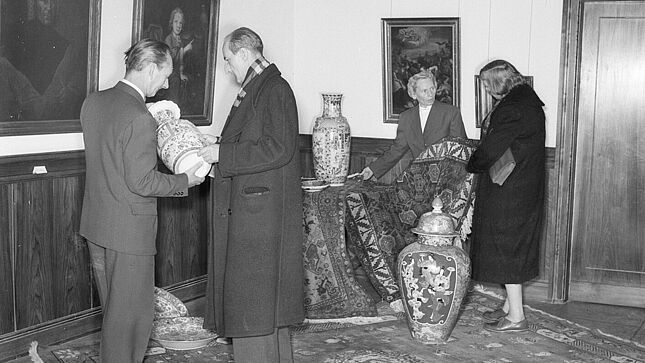
Initially, museums were the main beneficiaries of the confiscated cultural property. Over time, however, art objects and antiques were increasingly exported, mainly to the Federal Republic of Germany and Western Europe, to generate foreign currency for the GDR. These exports intensified significantly with the founding of Kunst und Antiquitäten GmbH in 1973 and ultimately led to the export of museum artefacts and protected cultural property from the GDR. In addition to the “expropriation” of cultural assets, Kunst und Antiquitäten GmbH also sold off national heritage. Along with works of art and antiques, this included large quantities of everyday cultural objects, from old toys, furniture and grandfather clocks to vintage cars, gas lamps and used cobblestones.
Since 1953, specific legislation had regulated the protection of cultural property and exportation of cultural goods in the GDR. A classification system had been in place since 1978, dividing cultural property into three categories (GBl der DDR 1978, Teil I, S. 166). “Cultural property in Category I and at the top of Category II” was excluded from export. In practice, the cultural property protection categories served primarily to retain valuable items belonging to people who left the country, which were then promptly exported via Kunst und Antiquitäten GmbH (KuA). Only on rare occasions was the Kunstschutzkommission (Art Protection Commission), later the Kulturgutschutzkommission (Cultural Property Protection Commission), the office responsible for export approval, able to prevent the export of outstanding items. Once the Cultural Property Protection Act of 1980 entered into force, private individuals had to report to state authorities any cultural property in their possession – it was a way to reduce one’s wealth tax but required disclosing art holdings that were of interest for export. The law also reinforced the protection of cultural property by threatening with fines and prison sentences, and could lead to the confiscation of the property in question.
The GDR holdings of the Federal Archives and the holdings of the Stasi Records Archive in the Federal Archives can help clarify the structural and procedural organisation involved in the confiscation and exploitation of art and cultural property in the GDR. They can also provide information about the origin of objects. Since March 1992, with the establishment of the “Stiftung Archiv der Parteien und Massenorganisationen der DDR-SAPMO” (Foundation Archive of the Parties and Mass Organisations of the GDR) as a dependent foundation under public law in the Federal Archives, the sources relating to the confiscation and relocation of cultural property in the Soviet Occupation Zone/GDR have been preserved in the Federal Archives. Since June 2021, when the “Bundesbeauftragten für die Unterlagen des Staatssicherheitsdienstes der ehemaligen DDR -BStU” (agency of the Federal Commissioner for the Records of the State Security Service of the former GDR) was integrated into the Federal Archives, the sources have been preserved in joint responsibility.